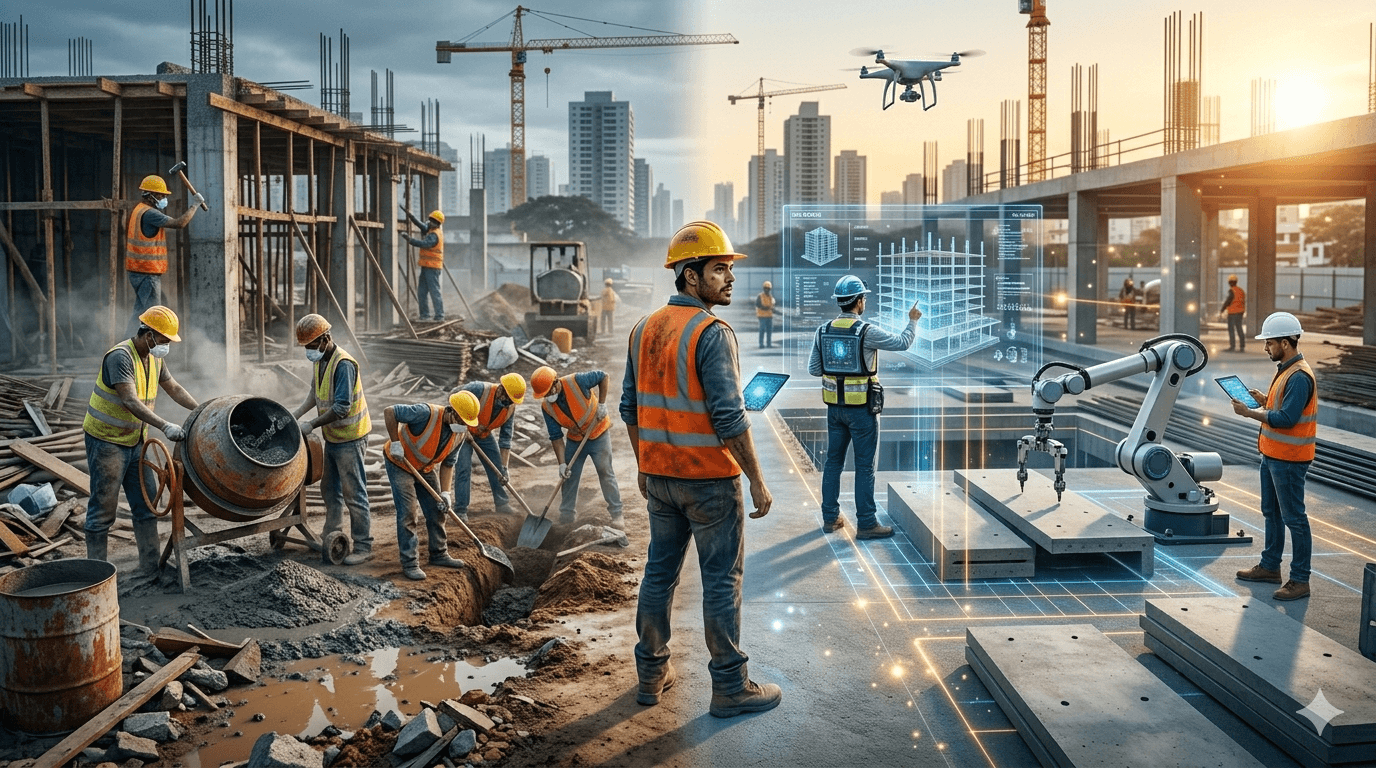
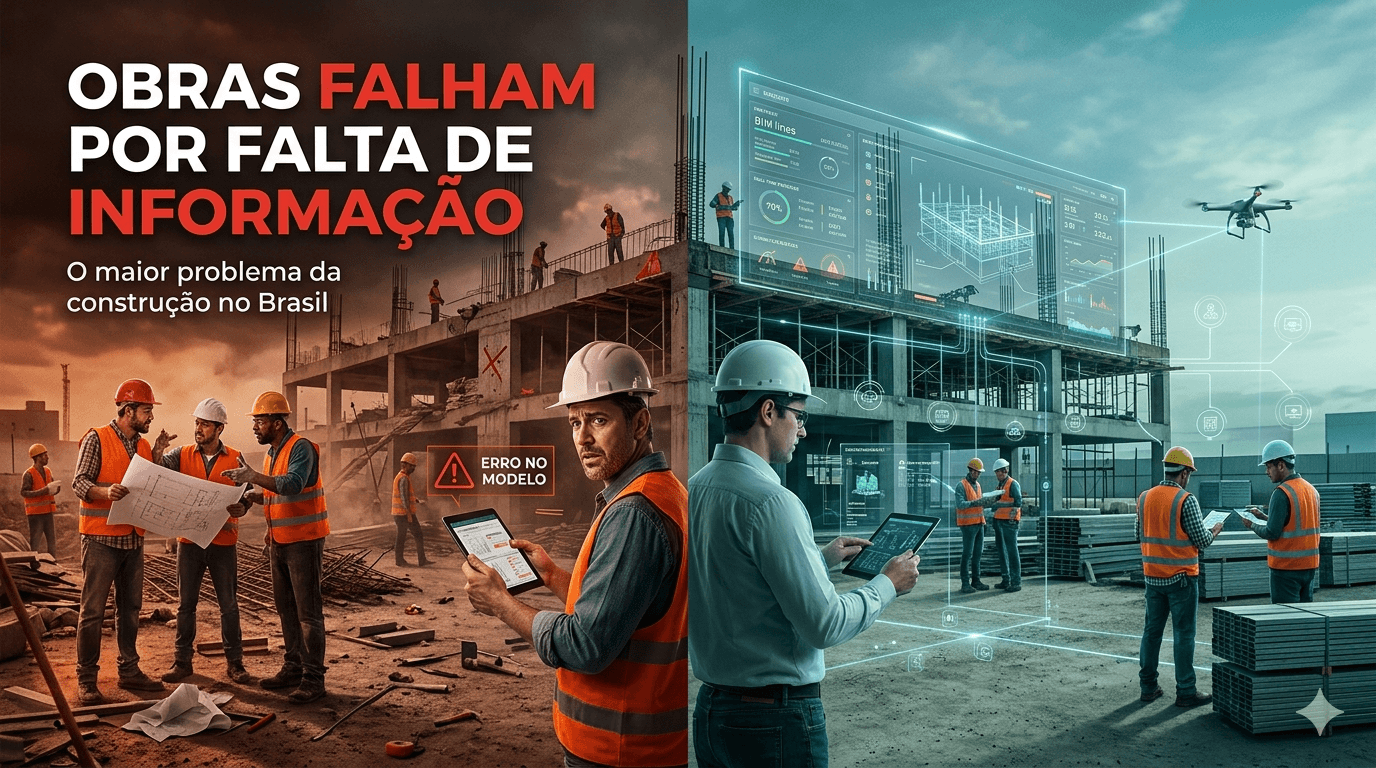
And this problem is even more common than it seems.
⚠️ The invisible problem impacting the entire construction project
At a traditional construction site, it is common to find situations such as:
-
Outdated information about the project's progress
-
Lack of integration between field teams and office
-
Decisions based on "guesswork"
-
Rework due to project incompatibility
-
Lack of real productivity control
These problems are not just operational.
They are structural.
📉 The real impact of lack of information
When reliable data is absent, the effect is immediate:
-
💸 Cost increase
-
⏳ Schedule delays
-
🔁 Constant rework
-
📉 Low productivity
-
⚠️ Operational and safety risks
According to industry studies, a large part of the problems in civil construction is directly related to lack or delay in information flow on the construction site.
In other words: it is not a lack of technical capacity — it’s a lack of visibility.
🧠 Why does this still happen in Brazil?
Even with technological advances, many construction projects still operate with traditional methods.
The main reasons are:
1. 📄 Manual processes
Data collection done manually, often with:
-
paper
-
spreadsheets
-
informal records
👉 This causes errors, delays, and information loss.
2. 🔗 Lack of system integration
Design, execution, and financial management often do not communicate.
👉 Result: misaligned decisions.
3. 🏗️ Low digitization in the sector
Civil construction historically invests less in technology.
The Construa Brasil program guide itself highlights the need for sector evolution through digitization, industrialization, and debureaucratization.
4. ⏱️ Data arrives too late
Many pieces of information are only collected after the problem has occurred.
👉 This prevents preventive actions.
🚀 What is changing: the era of real-time information
The good news is that this scenario is changing rapidly.
New technologies are enabling much more precise control of construction projects.
📊 BIM (Building Information Modeling)
BIM allows creating a complete digital model of the project, integrating:
-
Design
-
Schedule
-
Costs
-
Execution
Moreover, it reduces errors, improves planning, and increases information reliability.
📡 IoT (Internet of Things)
Sensors installed on-site allow:
-
Automatic monitoring of construction progress
-
Identification of material movement
-
Real-time productivity tracking
According to the guide, integrating IoT with BIM enables automatic and continuous data collection directly from the physical construction environment.
☁️ Cloud computing
Data stops being isolated and becomes:
-
Centralized
-
Updated in real time
-
Accessible from anywhere
🔗 Blockchain (evolving)
Allows greater:
-
Transparency
-
Traceability
-
Information security
Especially in contracts and supplier chains.
🏗️ The future of construction: data-driven decisions
With the integration of these technologies, a new management model emerges:
👉 Data-driven construction projects
This means:
-
Faster decisions
-
Fewer errors
-
Greater predictability
-
Cost reduction
-
Increased productivity
📌 What leading companies are already doing
More advanced companies are already:
-
Using BIM from design through operation
-
Automating data collection on-site
-
Monitoring indicators in real time
-
Integrating management systems
Meanwhile, companies that don’t evolve keep facing:
👉 The same problems, repeatedly.
⚠️ The greatest risk is not making mistakes — it’s not seeing the mistake
Lack of information not only prevents decisions.
It prevents recognizing the problem.
And this is the most dangerous.
✅ Conclusion: information is not a luxury — it is a necessity
Civil construction is undergoing a profound transformation.
At the heart of this transformation is information.
Companies that understand this:
👉 Gain efficiency
👉 Reduce risks
👉 Increase profitability
Those who ignore it:
👉 Fall behind
🔎 Final reflection
If you had access to all your project's data in real time…
👉 How many problems would you avoid?
📚 Sources used
-
Guidance Guide: Use of I4.0 Technologies and BIM in Construction Management — Construa Brasil Program (MDIC)
-
Technical content about BIM, IoT, and construction management present in the document (especially introduction, construction management, and technological integration sections)