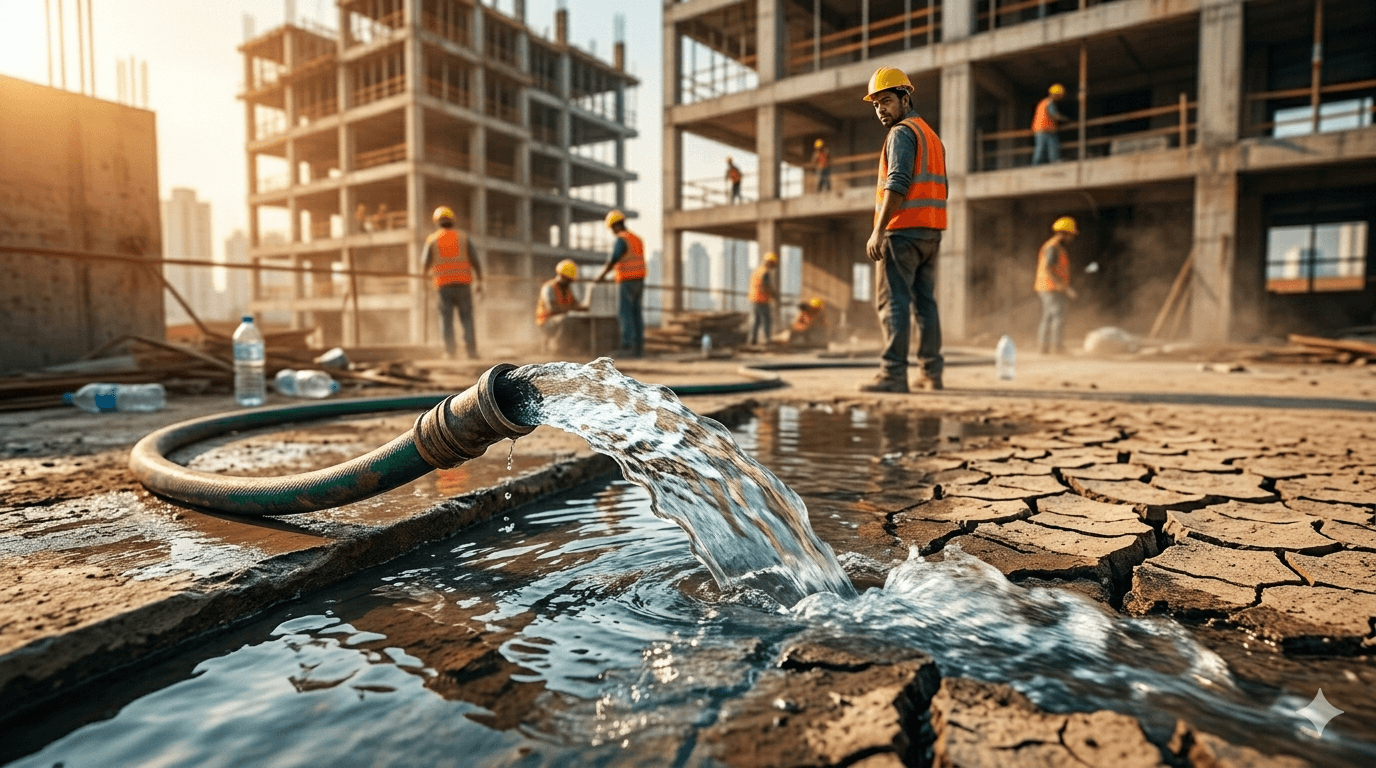
Besides the environmental impact, this represents hidden costs, low efficiency, and even operational problems.
If you work in construction, this content can help you reduce waste and save money immediately.
⚠️ Why is water so important in construction?
Water is present in almost every stage of the construction:
-
Concrete mixing
-
Concrete curing
-
Equipment cleaning
-
Material laying
-
Dust control
-
Sanitary use at the site
That is:
👉 without control, consumption becomes disproportionate
📉 The invisible problem: where water is being wasted
Waste does not happen in just one spot.
It occurs in small constant losses, which end up becoming a big problem.
🚨 1. Excessive equipment washing
💥 What happens in practice
-
Concrete mixers washed several times a day
-
Hoses left open uncontrolled
-
Use of running water without reuse
👉 Often, more water is used for cleaning than for production.
🧠 Real example
After a concrete pour, the team washes equipment with the hose open for minutes.
No control.
No reuse.
Result:
-
High consumption
-
Increased cost
-
Environmental impact
✅ How to avoid
-
Use controlled washing systems
-
Reuse water whenever possible
-
Train teams for conscious use
🚨 2. Concrete curing without planning
💥 What happens in practice
Concrete curing requires water, but:
-
It is done excessively
-
Without time control
-
Without optimized techniques
👉 This generates direct waste.
🧠 Real example
Slabs being continuously watered without real technical need.
✅ How to avoid
-
Use curing blankets
-
Apply chemical curing products
-
Define controlled schedules
🚨 3. Leaks and poorly made temporary installations
💥 What happens in practice
-
Improvised piping
-
Poorly fitted connections
-
Constant leaks at the site
👉 Small leaks cause large losses over time.
🧠 Real example
A poorly sealed connection drips for days.
Seems small.
But by the end of the month, the lost volume is huge.
✅ How to avoid
-
Regularly inspect installations
-
Use proper connections
-
Fix leaks immediately
🚨 4. Uncontrolled use for general cleaning
💥 What happens in practice
-
Excessive water used in floor washing
-
Cleaning without planning
-
Continuous use of hoses
👉 Lack of process = constant waste.
🧠 Real example
Area washed daily with running water when it could be cleaned with more efficient methods.
✅ How to avoid
-
Use dry cleaning when possible
-
Standardize cleaning processes
-
Assign responsible persons for control
🚨 5. Lack of measurement and consumption control
💥 What happens in practice
Most construction sites:
-
Do not measure consumption
-
Do not monitor usage
-
Have no goals
👉 What is not measured is not controlled.
🧠 Real example
The site pays the water bill but doesn’t know where it’s being spent.
✅ How to avoid
-
Install consumption meters
-
Create usage indicators
-
Monitor waste
🧠 What do all these errors have in common?
They are not technical.
They are management issues.
👉 Lack of control
👉 Lack of processes
👉 Lack of awareness
🌱 Water, ESG, and the future of construction
Efficient water use is directly linked to ESG practices, especially:
-
SDG 6 — Clean water and sanitation
-
SDG 12 — Responsible consumption
-
SDG 11 — Sustainable cities
Companies that don’t adapt:
👉 will lose competitiveness
🚀 How technology can help
Construction is evolving — and water management too.
Today it is possible to:
-
📡 Monitor consumption in real time
-
📊 Integrate data with management systems
-
🤖 Automate usage control
-
🧠 Make data-driven decisions
👉 This transforms waste into efficiency
💰 Reducing waste = increasing profit
This is the game changer.
Sustainability is not a cost.
👉 It is efficiency
👉 It is savings
👉 It is competitive advantage
⚠️ The most common mistake
Thinking that water waste is “normal.”
It’s not.
It’s lack of management.
✅ Conclusion: small changes, big impact
Controlling water use on site does not require large investments.
It requires:
-
Organization
-
Monitoring
-
Awareness
And results appear quickly:
-
Cost reduction
-
Operational improvement
-
Positive environmental impact
🔎 Final reflection
If you analyzed your construction site today…
👉 how much water is being wasted without you noticing?
📚 Sources and references
-
Sustainability practices in civil construction (SDG and ESG applied to the sector)
-
Guide: Use of Industry 4.0 Technologies and BIM in Construction Management — Construa Brasil Program
-
Principles of efficient resource management in works and operational control